
INSIDE THE PROCESS · How to Be the Client Your Designer Remembers The partnership that makes great design possible - and what gets in the way of it.

Every designer has a story about a project that felt effortless. Not because the brief was simple or the budget was generous or the house cooperated beautifully. But because the client and the designer were genuinely in partnership - moving in the same direction, trusting the same process, communicating in a way that made the work better rather than harder.
And every designer has the other story. The project where nothing was technically wrong but everything felt like friction. Where the budget was fine and the space was interesting and the client was, by any reasonable measure, a good person - and yet somehow the process was exhausting in a way that was hard to name.
The difference, almost always, comes down to one thing: the quality of the working relationship. Not the quality of the design brief. Not the size of the project. The relationship.
This series is about that relationship - what it looks like when it's working, what gets in the way, and how to be the kind of client who makes beautiful work possible.
WHAT YOUR DESIGNER ACTUALLY NEEDS FROM YOU
It's not your Pinterest board. It's not a precise list of materials or a fully-formed vision of the finished room. In fact, the clients who arrive with the most developed and specific ideas are sometimes the ones who find the process hardest, because they've already made the creative decisions and they're not sure they want to unmake them.
What your designer needs from you, at the start, is something closer to: a genuine conversation about how you live. How the house is used, and by whom. What frustrates you about the current space. What you've always wanted but never quite had. What you love, even if you can't explain why, and what you know - in your gut - isn't right, even when it looks beautiful in a magazine.
That conversation, held honestly, is worth more than any reference image. Because it gives a designer something to work from that no amount of style research can provide: the specific texture of your life, and what the space needs to do within it.
The clients who communicate how they live - messily, specifically, without editing for what sounds impressive - get better design. Every time.

3D render of what’s to come
THE TRUST QUESTION
At some point in every project, a designer will show you something you didn't expect. A material you wouldn't have chosen yourself. A layout that's different from what you discussed. A colour that feels surprising on a sample card in a way it won't feel surprising on a wall.
How you respond in that moment is one of the most important things you'll do in the entire project.
The instinct is to pull back toward safety - toward the thing you already know you like, the version you'd imagined, the decision that feels less risky because it's more familiar. That instinct is understandable. It's also, fairly often, the thing that produces the less interesting room.
Trusting your designer's recommendation doesn't mean abandoning your own judgment. It means holding your judgment lightly enough that new information can move it. It means asking 'help me understand why' before you say no. It means being willing to sit with a decision for 48 hours before you form a definitive opinion about it.
The clients who end up with the rooms they love most are, almost without exception, the clients who were willing to be surprised.
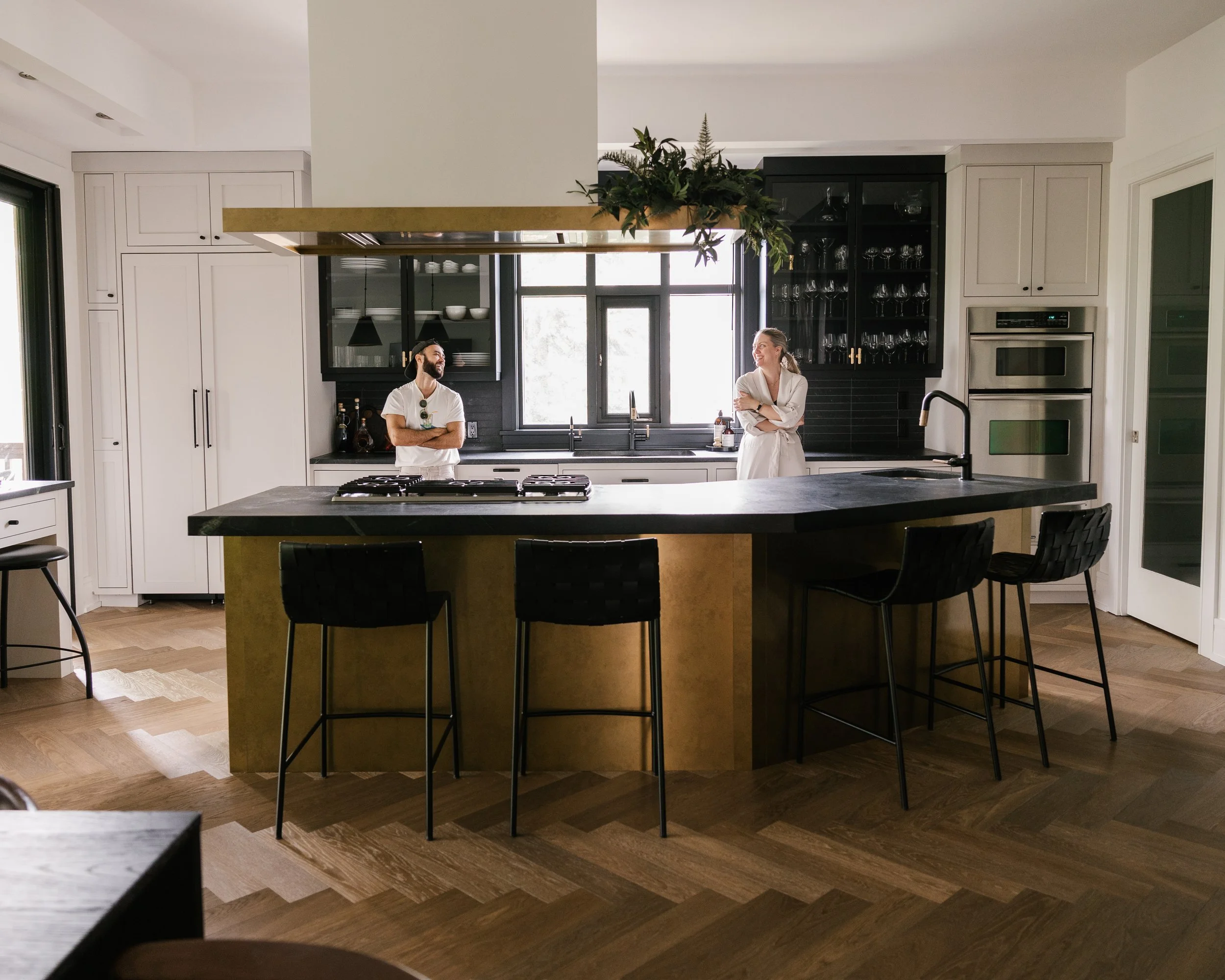
The AF Interiors team in our client’s transformed kitchen
THE COMMUNICATION THAT MAKES THE DIFFERENCE
Two things slow a project down more reliably than anything else - more than contractor delays, more than lead times, more than supply chain surprises.
The first is delayed decisions. Design has a logic and a sequence: one decision informs the next, and a hold in one place creates a hold in every place downstream. When a client takes three weeks to decide on a finish, the timeline doesn't slip by three weeks. It slips by six, or eight, because of everything that was waiting on that decision before it could move.
The second is feedback that comes too late. A concern raised after a specification has been ordered is a very different situation from the same concern raised before it. Not because designers won't address it - they will - but because the cost of addressing it multiplies significantly once a decision has moved from a drawing to a purchase order.
The practice that serves you best is simple: raise concerns early, decide promptly, and communicate clearly even when - especially when - what you're communicating is uncertainty. 'I'm not sure about this and I don't know why' is genuinely useful information. 'I think this is fine' said with hesitation, followed by 'actually I don't love it' three months later, is genuinely costly.
WHAT MAKES A PROJECT MEMORABLE
I've been doing this work for long enough to have a clear picture of what the best projects feel like from the inside. They feel like genuine collaboration. Like a shared investment in getting it right. Like both parties are on the same side of the table, working toward the same thing.
The client who is memorable - the one whose project a designer returns to in conversation years later, the one they're delighted to refer on - isn't always the one with the largest project or the most generous budget. They're the one who was present, communicative, willing to trust, and willing to push back when something genuinely felt wrong.
That's the partnership. And the design it produces is almost always worth the effort of building it properly.
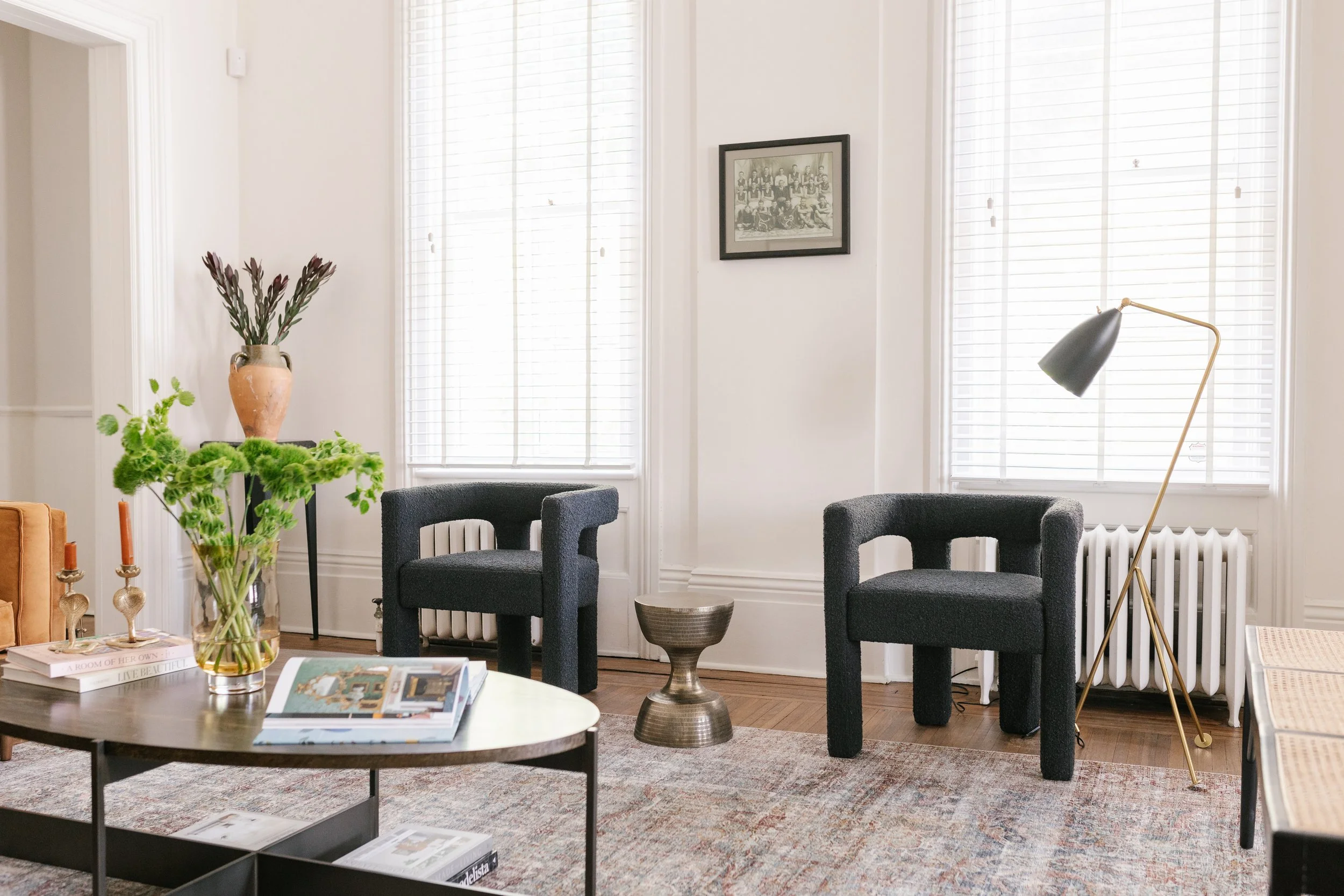
Victorian Modern Living
THE INFORMED CLIENT · QUICK REFERENCE
✦
Communicate how you live - messily and specifically. The real constraints and habits, not the edited version.
✦
Bring reference images for feeling and atmosphere, not as literal prescriptions. 'I like how this feels' not 'I want this exactly.'
✦
When shown something unexpected, ask 'help me understand this' before you say no.
✦
Make decisions promptly. Every delayed decision has downstream consequences.
✦
Raise concerns as soon as they form - not after the purchase order.
✦
'I'm not sure and I don't know why' is useful information. Say it.