
The Brief Conversation: Why the beginning is everything - and how to communicate what you want, including the things you can't articulate yet.
The brief is the foundation of the project. It is also, in most cases, the thing that clients prepare for least carefully.
This isn't a criticism. It's understandable. Most people haven't thought explicitly about how they live in their home - they've just lived in it. And articulating a vision for something you want but haven't experienced yet is genuinely difficult. You know you want it to feel 'calm' or 'warm' or 'considered,' but translating those words into decisions about materials and light and layout and proportion requires a kind of translation that doesn't come naturally.
The brief conversation - the one that sets the whole project in motion - is where a good designer does some of their most important work. Not presenting options, but drawing out information. Asking the questions that help a client articulate what they want, including the things they didn't know they wanted until the question was asked.
Understanding what goes into that conversation, and how to participate in it fully, changes the quality of everything that follows.
THE QUESTIONS WORTH THINKING ABOUT BEFORE YOU MEET
A brief isn't filled out in advance and handed over. It emerges through conversation. But there are things worth thinking about before that conversation happens, because having considered them - even loosely - means you arrive with more to contribute.
How does this space actually get used? Not how it's supposed to be used. How it's actually used, by the actual people who live there, including the habits and patterns that might seem mundane. The family that eats every meal in the kitchen even though there's a dining room. The home office that gets used at 11pm and needs to not look like an office during the day. The children who are currently small and will not always be.
What frustrates you about the current space? Not aesthetically - functionally. The storage that doesn't work. The light in the afternoon that you've never found a solution for. The room that everyone avoids without quite knowing why.
What do you love, and why? Not just what you love aesthetically, but what spaces have made you feel something. A hotel room. A friend's house. A restaurant. The feeling of those spaces is often more useful information than any photograph.
What are you not willing to change? Every client has them - the non-negotiables that don't always get stated because they seem obvious. The piece of furniture that isn't going anywhere. The colour that's been in the family for three generations. These are important information, and they're almost never volunteered unless directly asked for.
The things you can't articulate are often the most valuable information. A good designer will help you find the words - but you have to be willing to look for them together.
THE REFERENCE IMAGE CONVERSATION
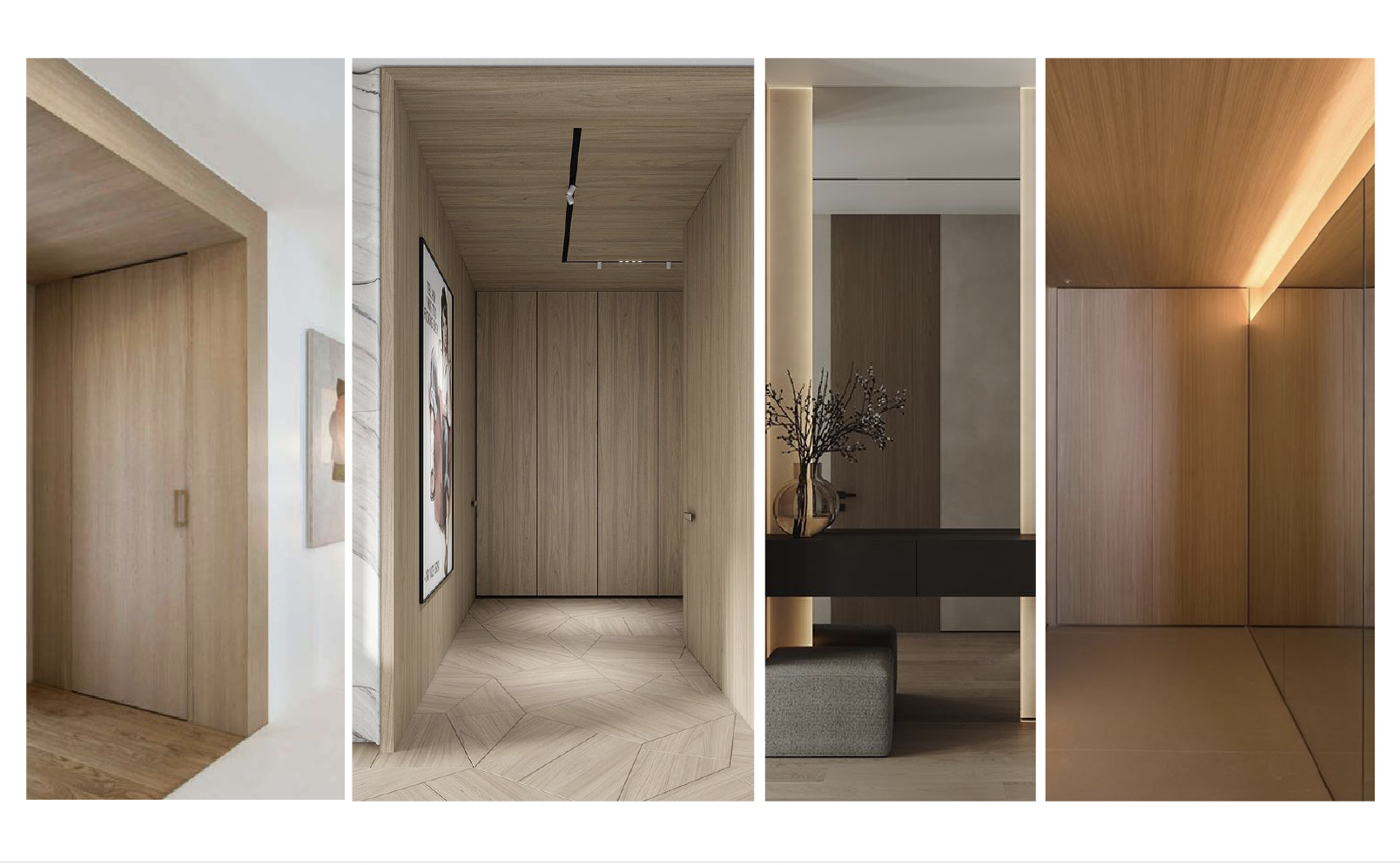
Entrance Inspiration
Most clients arrive with images. This is useful - but only if both parties understand what the images are for.
Reference images are mood, not instruction. They communicate atmosphere, proportion, quality of light, the feeling a space gives you when you're in it. They are not a shopping list. When a client shows a designer an image and says 'I want this,' what they almost always mean - even if they don't say it - is 'I want whatever this feels like.' The specific sofa and the specific rug and the specific lamp are almost never the point.
The most useful reference images are ones where you can also say why. Not just 'I love this room' but 'I love this room because it feels like there's always enough light' or 'because nothing in it looks like it's trying too hard.' The why is what a designer can actually work with.
The same applies to images of things you don't want. Knowing what to avoid is as useful as knowing what to aim for, and clients often find it easier to articulate the negative. 'Nothing that looks like a hotel lobby' or 'no cold materials' or 'I don't want it to feel finished in a way that makes us nervous about using it' - these are specific, actionable, and more useful than they might sound.
WHEN YOUR VISION AND THE REALITY DON'T MATCH
Sometimes the brief, once fully developed, turns out to be in tension with the space or the budget or the structural reality of the building. The client who wants a light-filled open plan and has a Victorian terraced house. The brief that calls for natural materials throughout and a budget that makes that genuinely challenging in some areas.
When a designer brings you a constraint - a thing the brief calls for that the project can't deliver - the most useful response is curiosity rather than resistance. Ask what alternatives exist. Ask where the constraint comes from and whether it's fixed or flexible. Ask what could be achieved instead.
The brief is not a contract. It is a starting point. The best briefs evolve through the project as both parties learn more about the space, the possibilities, and each other. The skill - on both sides - is knowing when to hold to an original intention and when to follow the better idea that emerged from the process.
THE INFORMED CLIENT · QUICK REFERENCE
✦
Think about how the space is actually used - not how it's supposed to be used. Real patterns, real habits.
✦
Bring images for atmosphere and feeling, not as literal prescriptions. Explain what you love about each one.
✦
Name the things that aren't negotiable before the project starts - not partway through.
✦
Articulating what you don't want is as useful as articulating what you do.
✦
The brief is a starting point. The best ones evolve. Let them.
✦
If something in the brief conflicts with reality, ask 'what's possible instead' before deciding it's a problem.